When Mainstream Refinancing Is No Longer the Right Fit: £350,000 Rural…
Looking Beyond Payment History: A £185,000 Agricultural Refinance
Looking Beyond Payment History: A £185,000 Agricultural Refinance
Not every agricultural refinance is straightforward. Farming businesses often combine several income streams, changing enterprises and property assets that require careful consideration. In some cases, the borrowers’ conduct and communication can be just as important as the numbers.
This was the situation when a mother and son returned to UK Agricultural Finance for support with refinancing their existing borrowing.
The family had previously completed a loan with us in 2020. Since then, their farming operation had evolved and, although their recent payment history had not always been consistent, they had remained in regular contact. Whenever a payment was delayed, they communicated proactively and brought the account back up to date.
That responsible approach gave us valuable context when assessing their new application.
The Funding Requirement
The borrowers required a £185,000 term loan over 84 months. The facility was agreed at an interest rate of 6.59% plus the Bank of England base rate, with an approximate loan-to-value of 60%.
The security included around 40 acres of pasture, a range of agricultural buildings and a two-bedroom farmhouse. The farmhouse was in a very poor state of repair and was not suitable for occupation, so the borrowers were living in a static caravan on the holding.
The purpose of the loan was to refinance the existing facility onto improved terms and create a more sustainable repayment structure.
Although the application came directly to UK Agricultural Finance rather than through a broker, it demonstrates how a fuller understanding of the borrower’s circumstances can help identify a workable solution in cases that may not fit a standard lending approach.
A Diversified Income Profile
The borrowers were a mother in her sixties and her son in his thirties. Both had income outside the farming business.
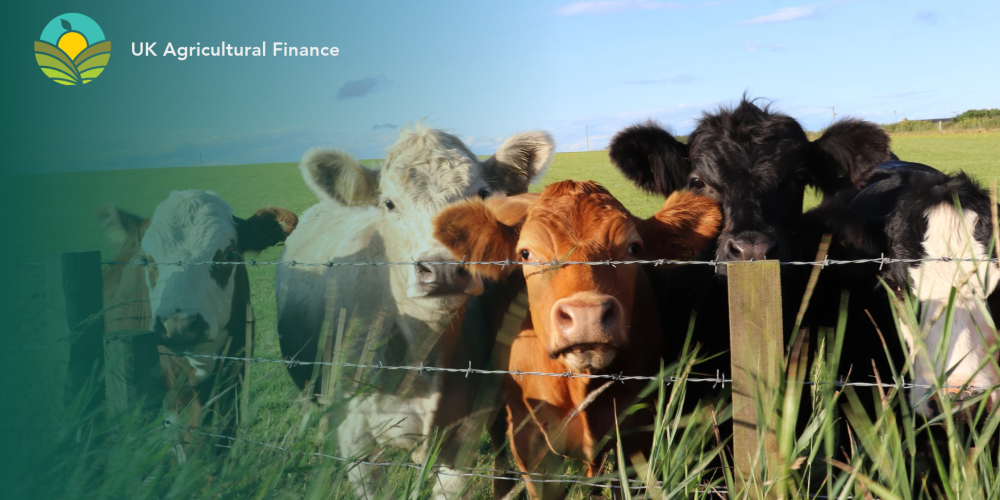
The mother worked in care and also received pension income, while the son was employed full-time as an HGV driver. Alongside their employment, they operated a herd of approximately 30 suckler cows, producing average annual income of around £25,000.
They had also reseeded their fields with hybrid grass, which had improved yields. By carrying out the baling work themselves, they generated approximately £20,000 in annual revenue.
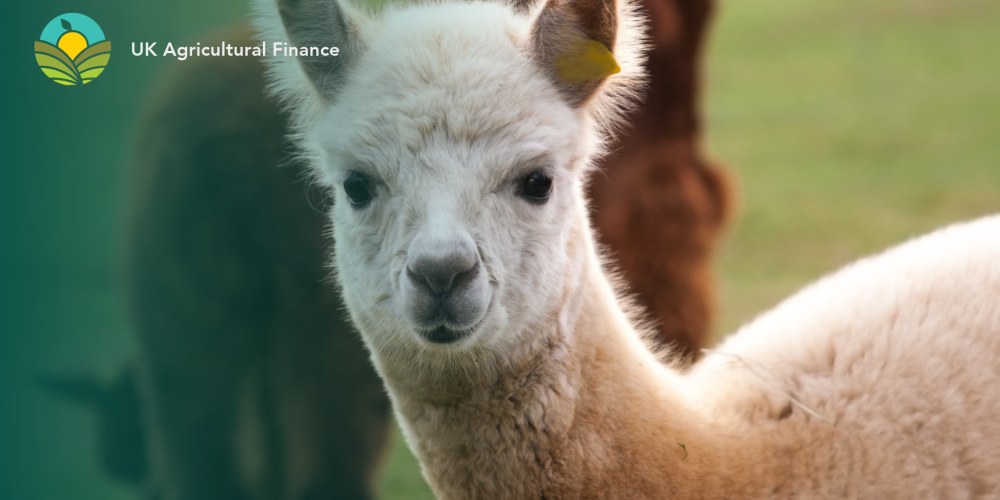
Further income came from cattle sales, meat sales and alpaca walks. The borrowers also planned to let part of the land to local horse owners, with expected additional income of approximately £2,500 a year. The son was developing a small side business that could provide another source of income in future.
This combination of employed, agricultural and diversified income was central to the affordability assessment.
A Business That Had Adapted
When UK Agricultural Finance first supported the family in 2020, they had a herd of around 50 beef cattle and a rare-breed pork enterprise involving approximately 20 pigs.
The business had since changed. Rather than continuing to raise pigs, the borrowers were sourcing meat locally and reselling it.
Changes of this kind are not necessarily a sign that a farming business is weakening. Farming enterprises often need to adapt in response to labour availability, costs, market conditions and personal circumstances. In this case, the borrowers had retained several productive income streams while developing new opportunities.
Managing The Property Considerations
The valuation raised two matters requiring further due diligence.
First, the farm did not appear to own its primary access route. Access was being exercised through a right of way over neighbouring land. Our solicitor was therefore instructed to confirm that the legal rights were properly documented and sufficient for the lender’s security.
Second, there was no Energy Performance Certificate for the farmhouse because it was unoccupied and uninhabitable.
To address this, the proposed facility documentation included a warranty requiring the borrowers to obtain and provide an Energy Performance Certificate confirming a rating of E or better before the farmhouse could be occupied.
These issues did not automatically prevent the loan from proceeding. Instead, they were managed through appropriate legal checks and clearly defined facility conditions.
Assessing The Payment History Fairly
The borrowers’ previous facility had experienced periods of irregular payment performance. However, they had remained engaged throughout, kept UK Agricultural Finance informed and made good any delayed payments.
Having worked with the family before, we understood both the pressures they had faced and the way they had responded. They did not avoid difficult conversations. They acted reasonably and responsibly when issues arose.
That history of communication helped us assess the case on its full merits rather than looking only at individual payment dates.
A Clear Repayment Plan
The primary repayment route was monthly repayment of the term loan from the borrowers’ combined income, which we assessed as affordable.
Over the longer term, the borrowers intended to refinance with another lender once they had stronger and more consistent financial accounts.
As a secondary strategy, they also had assets that could be sold to support repayments or redeem the facility if required.
The result was a structured refinance that allowed the borrowers to retain their farm, continue developing their income streams and work towards a stronger financial position.
For brokers, this case is a useful reminder that an imperfect payment history does not always make an agricultural refinance unworkable. Where borrowers communicate openly, demonstrate affordability and have credible repayment routes, there may still be a viable solution.
UK Agricultural Finance works with brokers to understand the full story behind each rural business, including its income, assets, challenges and future plans.

Related Posts