£3.35m Agricultural Bridge Supports Deleveraging for Diversified Welsh Farming Business A…
£1.38m Agricultural Bridge Supports Family Farm Turnaround and Succession
£1.38m Agricultural Bridge Supports Family Farm Turnaround and Succession
A farming business can look very different depending on whether a lender considers only its historic accounts or also understands what has changed operationally. Sometimes a farming business just needs an agricultural bridge loan to get its feet back on solid ground.
For one third-generation family farming business in Herefordshire, several difficult years had resulted in supplier and livestock-market liabilities accumulating at the same time as the business was changing the way it bought, reared and sold cattle.
However, there were also clear signs of recovery.
The parents and their two sons were all actively involved as equal partners, the next generation had taken increasing responsibility for the operation, profitability was improving, and specialist agricultural advisers had been engaged to support the turnaround.
UK Agricultural Finance provided approximately £1.38 million of bridging finance over 36 months.
The agricultural bridge facility allowed the family to substantially reduce historic liabilities, restore working capital and continue implementing a revised livestock model intended to strengthen margins and cash flow.
A Third-Generation Family Farming Business
The family has farmed in the region since the 1950s.
The current partnership was established following the division of an earlier family farming business in 2016. That transition created some immediate financial pressures.
A significant amount of older machinery had to be replaced relatively quickly, resulting in substantial Hire Purchase commitments. At the same time, the newly established partnership no longer benefited from the banking history associated with the previous farming entity.
That made conventional borrowing more difficult to obtain despite the family’s extensive agricultural experience. Further operational challenges followed during subsequent years, contributing to weaker trading performance and increasing pressure on working capital.
More recently, however, the business has entered a very different phase.
The Next Generation Taking Greater Responsibility
One of the strengths of the proposition was the management structure now in place.
All four family members remain actively involved, but the two sons, both in their 30s, have assumed increasing responsibility for the day-to-day business.
One son leads livestock procurement and sales, attending livestock markets across the region and using his knowledge of markets and buyers to manage purchasing and disposal decisions.
The other oversees day-to-day farming operations, livestock management and cropping. He has also introduced updated calf-rearing systems intended to improve operational efficiency and animal welfare.
Their father continues to oversee breeding activities, while their mother is responsible for the farm administration.
This provides both clearly defined responsibilities and a genuine succession route, with the next generation already actively managing significant parts of the business.
Changing the Livestock Model
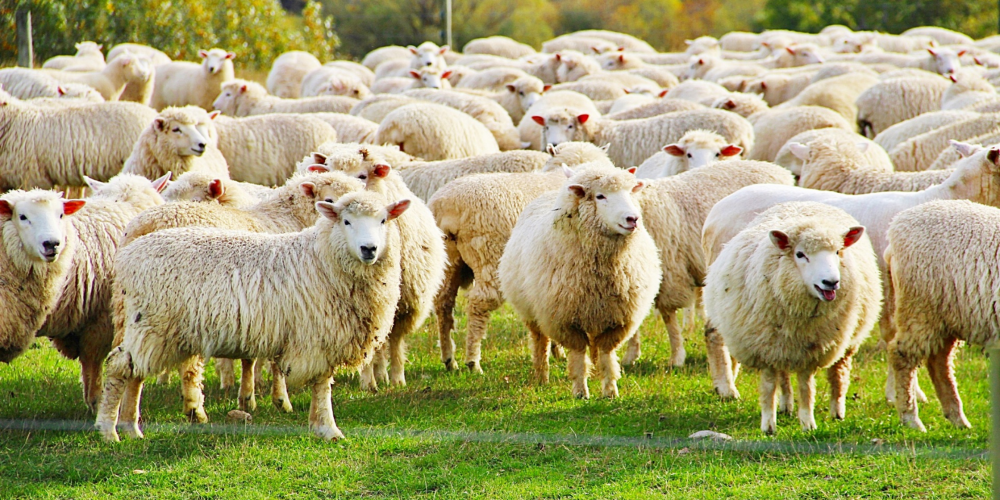
The partnership operates a substantial livestock enterprise involving sheep and cattle.
It maintains a significant breeding ewe flock and cattle population and also purchases livestock on behalf of processors.
A major part of the current turnaround is a deliberate change to the cattle operation. Historically, the business had relied more heavily on purchasing forward stores and cull cattle on a relatively short trading cycle. It is now returning to a calf-rearing model.
This gives the family greater control over when animals are purchased and sold and provides more opportunity to create margin through the rearing process itself. The proposed funding also allows the partnership to reduce amounts owed through livestock markets and suppliers.
That should enable it increasingly to purchase calves directly from farmers rather than relying as heavily upon market transactions, potentially improving purchasing margins further.
A £1.38m Agricultural Bridge Loan
The borrowers had initially arranged funding elsewhere, but that funder subsequently withdrew from applications that were still in progress. UK Agricultural Finance was then approached to consider the requirement.
Approximately £1.13 million of the eventual facility was allocated towards repaying existing liabilities, including amounts owed to livestock markets, agricultural suppliers and other creditors.
A further approximately £250,000 provided funds for livestock purchases, feed, straw, harvesting costs and working capital. This included approximately £120,000 for breeding ewes.
For a livestock business of this scale, restoring access to working capital is an important part of the recovery strategy. It enables the family to make purchasing decisions based upon commercial opportunity rather than simply immediate cash availability.
Substantial Agricultural Security
The facility was supported by a significant agricultural property portfolio.
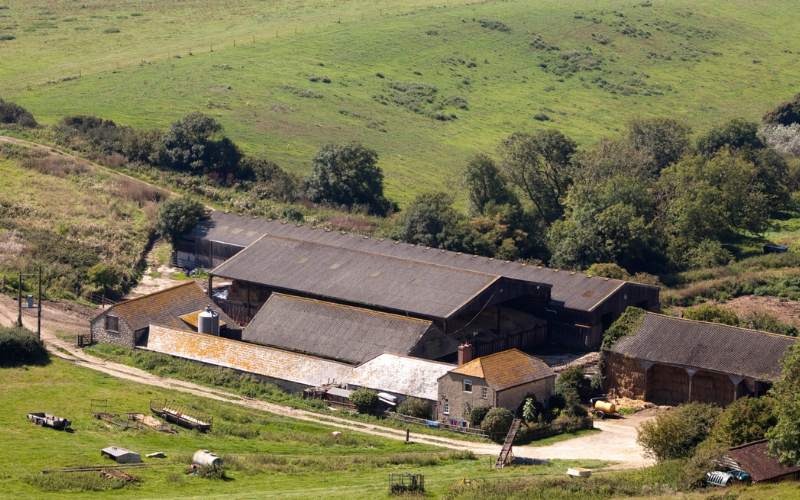
UK Agricultural Finance took a first charge over a holding of around 180 acres comprising a substantial farmhouse, approximately 30,000 sq ft of modern agricultural buildings, pasture and woodland.
Additional second-charge security was provided over two further substantial agricultural holdings already subject to first-charge lending with the family’s existing bank.
Together, the security included several hundred acres of farmland, farmhouses, modern agricultural buildings, woodland, a residential letting property and holiday accommodation.
While the LTV against the first-charge property alone would have been considerably higher, the additional security brought the overall effective LTV to just under 50%.
The site visit confirmed that the principal assets were well maintained, the land was being actively farmed and the agricultural buildings were modern and suitable for the scale of the enterprise.
Evidence That the Turnaround Is Progressing
Historic financial performance reflected the challenges the business had faced.
Turnover reduced as the partnership restructured its livestock activities, while earlier periods had recorded substantial losses. More recent figures, however, indicate movement in the right direction.
The latest accounts show the farming operation returning to a modest profit, while property income from residential and holiday letting has continued to provide additional diversification.
Brown & Co has also been engaged as agricultural consultant to work with the family on financial restructuring and business improvement.
Its forward budget anticipates further improvement as the calf-rearing programme matures, current livestock reaches sale weight and several significant Hire Purchase agreements expire.
Those changes should release additional cash flow into the business over the next two years.
A Clear Route Back to Mainstream Lending
The intended exit from the UK Agricultural Finance bridge is to refinance onto conventional agricultural lending once the turnaround has produced a stronger set of financial accounts.
The family also has a credible alternative.
Approximately 56 acres of agricultural land and 20 acres of woodland have been identified as non-core assets that could be sold if necessary. A neighbouring farmer has already made a substantial offer for this land.
The family has not accepted it because there is currently no need to sell, but its availability gives the borrowers an additional route to materially reduce the facility if required.
Importantly, the land can be sold without undermining the core farming operation.
Lending Into a Changing Business
This was not a case where historic trading performance could simply be ignored.
The business had experienced genuine difficulties and the turnaround still needed to be delivered. But there was also important evidence of change.
- The business had returned to profitability.
- The livestock model was being restructured.
- Hire Purchase commitments were approaching expiry.
- Professional agricultural advisers were actively involved.
And perhaps most importantly, the two sons were already taking substantial responsibility for running a third-generation farming enterprise.
For UK Agricultural Finance, the role of the bridge was therefore to provide sufficient time and working capital for those changes to take effect.
It demonstrates why agricultural lending sometimes requires looking beyond historic figures to understand what caused the difficulty, what has already changed and whether there is a realistic route from today’s position to a stronger one tomorrow.

Related Posts