Buying farmland at auction can present an exciting opportunity for farmers…
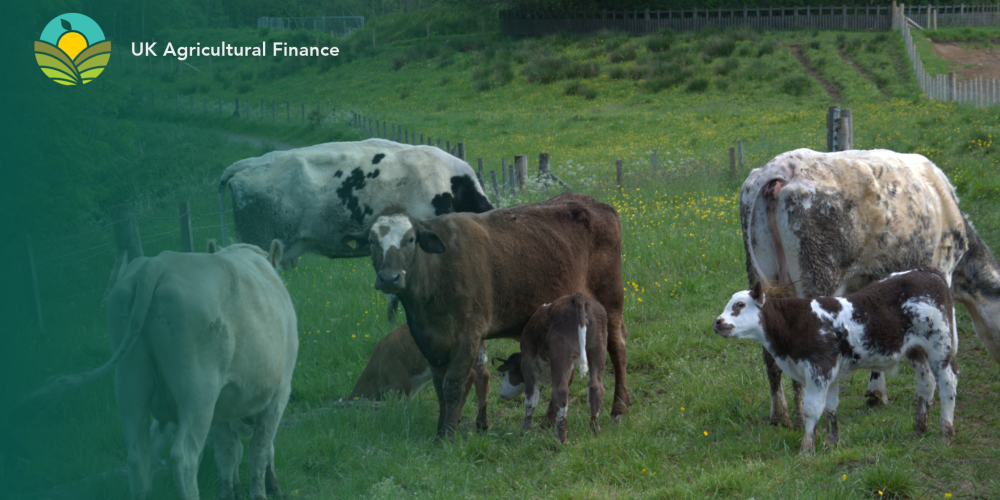
Adapting the Farm for the Next Generation: Finance Supports Calf-Rearing Growth
Adapting the Farm for the Next Generation: Finance Supports Calf-Rearing Growth
Farming businesses often have to adapt in response to circumstances that could not have been planned for.
For one second-generation farmer, a stroke around eight years ago changed the role he was able to play physically on the farm.
Although he made a good recovery, ongoing mobility difficulties meant that undertaking the same level of practical farm work was no longer possible.
Rather than stepping away from a business he had spent more than 40 years building, the family gradually restructured the way the farm operates.
His two adult children now undertake much of the physical work, while the borrower concentrates increasingly on management, administration and business planning.
That transition has coincided with another important development: significant investment in purpose-built calf-rearing facilities designed to increase the capacity and profitability of the livestock enterprise.
When an initial funding route could not accommodate the full security proposition, the case was introduced to UK Agricultural Finance by Finanta.
UK Agricultural Finance provided approximately £1.5 million of 36-month bridging finance, at an LTV of around 50%, with 18 months of interest rolled up.
The facility refinanced existing borrowing while providing additional capital for livestock purchases and working capital, giving the family time to put the recently completed infrastructure to productive use.
More Than 40 Years on the Same Farm
The borrower, now in his mid-60s, represents the second generation of his family to farm the holding.
His father acquired the property during the 1980s, and the borrower has spent most of his working life managing and developing the enterprise.
Today, the farm operates as a mixed livestock business combining calf rearing with a breeding sheep flock of approximately 330 ewes.
The holding extends to around 170 acres and includes a four-bedroom farmhouse, a separate cottage, traditional and modern agricultural buildings, productive Grade 2 and Grade 3 farmland and a small area of woodland.
Approximately 125 acres are occupied and farmed directly, while the remaining land is let under a Farm Business Tenancy, creating an additional source of rental income.
The farm has also benefited from significant recent investment in specialist calf-rearing accommodation.
That infrastructure provides the physical capacity for the next stage of growth.
Adapting After Ill Health
Around eight years ago, the borrower suffered a stroke.
Although his recovery has been positive, he continues to experience difficulties with walking and physical work.
For a farmer who had spent decades actively working the holding, that inevitably required the family to reconsider how the business was managed.
His two children have subsequently taken on much of the practical work required across the farm.
The borrower remains actively involved but has shifted his focus towards management, business planning and administration, where his four decades of farming experience continue to play an important role.
This has created a practical form of succession.
The next generation is not waiting for a future date to become involved in the business. They are already responsible for significant parts of its day-to-day operation, while continuing to benefit from their father’s experience and oversight.
For UK Agricultural Finance, that helped demonstrate both operational continuity and a credible transition between generations.
Increasing Calf Numbers
The immediate commercial opportunity centres on making fuller use of the farm’s recently completed calf-rearing infrastructure.
The business currently rears approximately 150 calves.
Under the proposed expansion, this is expected initially to increase towards approximately 600 calves, with the potential to reach around 750 head over time.
Calves are typically purchased at approximately three weeks old, weaned at around eight weeks and subsequently grown on.
Based on the borrower’s existing model, the anticipated return is approximately £250 per calf.
Crucially, the infrastructure required for this increase in numbers is already largely in place.
The finance is therefore not being used to fund an entirely untested new enterprise.
It is helping the family make use of recently completed agricultural infrastructure by providing the capital to purchase additional livestock and sufficient working capital to support those animals through the rearing process.
Why Was Refinancing Required?
The borrower already had approximately £1.25 million of secured borrowing.
That facility had originally been used to refinance an earlier loan and provide funding towards construction of the livestock infrastructure now forming the basis of the expansion plan.
A proposed replacement lender was initially considered, but its lending criteria did not allow it to accommodate all of the assets within the wider security proposition.
As a result, the available loan-to-value was insufficient to meet the borrower’s full requirement.
UK Agricultural Finance was subsequently approached through Finanta to consider the wider agricultural security and business plan.
Business Development Manager Ryan Morley worked with the borrower and introducer to understand the existing farming operation, the recently completed investment and how the proposed increase in calf numbers was expected to change the financial performance of the farm.
Approximately £1.5 Million of Bridging Finance
UK Agricultural Finance provided a bridging facility of approximately £1.5 million over 36 months, supported by an overall LTV of around 50%.
Approximately £1.25 million was used to refinance the existing secured loan.
The balance included approximately:
- £150,000 towards the purchase of additional livestock;
- £65,000 of working capital to support the expanded rearing programme; and
- transaction and broker costs associated with arranging the facility.
The first 18 months of interest are rolled up.
This structure gives the family time to increase livestock numbers and progress animals through the production cycle before the facility needs to be serviced from the expanded trading performance.
The intention is that, once calf numbers have increased towards the planned level, stronger turnover and profitability will provide a better basis for longer-term agricultural refinancing.
Strong Agricultural Security
The loan is secured against the approximately 170-acre holding at an LTV of around 50%.
In addition to productive agricultural land and the recently constructed calf-rearing facilities, the property includes two residential buildings.
The main farmhouse is occupied by the borrower and is subject to an agricultural occupancy condition.
A separate two-bedroom cottage is currently vacant and requires significant modernisation.
Longer term, the borrower is considering renovating the cottage for use as holiday accommodation.
Planning permission has also been obtained for two timber glamping pods, which are currently under construction.
These provide possible future diversification opportunities, but they are not the basis upon which the immediate calf-rearing expansion is being undertaken.
A Planned Route Back to Longer-Term Agricultural Finance
The borrower’s preferred repayment strategy is to refinance onto a longer-term agricultural facility before the UK Agricultural Finance bridge expires.
The intention is to approach that refinance with up-to-date financial information demonstrating the impact of increased livestock numbers on turnover and profitability.
The 36-month bridge therefore has a specific role.
It provides the time and working capital needed to make use of infrastructure that has already been built and establish the increased level of trading within the farm’s financial performance.
There is also an alternative route if the expected improvement is not achieved.
The borrower has substantial equity within the agricultural property and has indicated that land or other farm assets could be sold to reduce the outstanding balance and make a subsequent refinance more achievable.
A Farm Changing Without Losing Decades of Experience
What makes this case particularly interesting is that growth and succession are happening together.
The borrower’s stroke meant the family had to change how the farm operated sooner than they might otherwise have expected.
But adapting his role has not meant losing more than 40 years of farming knowledge from the business.
Instead, his children have taken on much of the physical operation while he concentrates on the management and commercial decisions surrounding the farm.
At the same time, investment in new calf-rearing facilities has created an opportunity to increase livestock numbers and improve the performance of the business they will increasingly be responsible for.
For UK Agricultural Finance, the case involved looking beyond historic affordability in isolation and considering the strength of the agricultural assets, the infrastructure already created, the experience within the family and whether there was a realistic route from the farm’s current position to a stronger one.
The result is a facility designed to give this second-generation farmer and his family time to demonstrate what their recent investment — and their evolving way of working together — can deliver.
If you are advising an agricultural business where changing family circumstances, succession or recent investment mean its funding requirements no longer fit neatly within conventional lending criteria, UK Agricultural Finance can consider the individual circumstances behind the proposal.

Related Posts